
You're at the scent bar
d'Annam White Rice Eau de Parfum
Smell it like a perfumer
Spray once on a blotter or your wrist, then tap the button. The page will tell you what to notice as it changes.
Opening0:00
0–10 min · TopRice, Pandanus
10–60 min · HeartOrris, Jasmine
1 hour + · BaseWhite Musk, Tonka Bean, Cedarwood
Don't rub your wrists — it crushes the top notes. Come back to this page in an hour: the base is where Parfum shows its real character.
Your verdict
Take it with you
Send yourself the notes, the price and the link — so you remember which one this was.
Have an account? Sign in and this bottle joins your scent profile automatically.
Ship it home
Buy online here and it arrives at your door — or take it from the counter today.
$160.00 · 1.7 oz (50 ml)
Buy online & ship home
Online ordering opens this week — ask us at the counter
Smell next
Closest to this one on our shelves — ask us to pour any of them.
 Villa Erbatium Bambini Soap Eau de ParfumVilla Erbatium · $145.00
 Attar Al Has Skin Musk Extrait de ParfumAttar Al Has · $315.00
 Hind Al Oud Pink Musk ParfumHind Al Oud · $215.00
Want a match for your taste instead? Ask our AI finder · scent bar, 92 West Main St, Somerville

d'Annam White Rice Eau de Parfum
1.7 oz (50 ml)
$160.00
Sale price
$160.00
Regular price
Skip to product information


d'Annam White Rice Eau de Parfum
Byd'Annam
$160.00
Sale price
$160.00
Regular price
100% authentic, guaranteed — sourced directly from the houses we carry
Complimentary standard shipping on US orders of $79 or more
Smell it first at our Somerville, NJ scent bar — every sample hand-decanted from the original retail bottle. Plan your visit
Description
What it smells like
White Rice opens with the clean, slightly sweet grain of rice itself—that particular warmth of freshly cooked jasmine or basmati—paired with pandanus, which lends a subtle green, almost coconut-like softness to the top notes. There's nothing gourmand or heavy about this opening; instead, it reads as precise and quietly comforting, the way a bowl of rice at the centre of a meal grounds everything around it.
As the fragrance settles, orris and jasmine emerge in the heart. The orris brings a powdery, almost iris-like elegance—a whisper of violet and root—while jasmine adds a delicate floral sweetness without tipping into perfumery cliché. Together, they evoke the ritual of the meal itself: the gentle steam rising, the quiet presence of flowers that might sit on a nearby table, the sensory world beyond the plate.
The base anchors everything in white musk, tonka bean and cedarwood. The musk is clean and skin-like, never synthetic or aggressive. Tonka brings a soft vanilla warmth—creamy but restrained—while cedarwood adds structure and a faint woody dryness that prevents the composition from becoming sweet. What emerges is a fragrance that feels both nourishing and refined: intimate without being heavy, present without demanding attention.
This is Anh Ngo's translation of white rice as scent—not a literal recreation, but a true-to-life interpretation of what the ingredient means culturally and sensorially. Rice is sustenance, ritual, silence. It is the canvas on which other flavours sit. And in this fragrance, it becomes something wearable: a second skin that whispers rather than shouts.
Who made it
Anh Ngo is an IFF perfumer and the principal nose behind d'Annam's Vietnam-inspired collection. Her work is defined by a singular gift: the ability to translate specific Asian foods, drinks and memories into precise, evocative, true-to-life compositions. Rather than reaching for obvious fruity or spiced accords, Ngo listens to the subject—whether it's white rice, matcha or mango sticky rice—and allows the fragrance to emerge from genuine understanding of what that ingredient represents.
Her approach is rooted in specificity. She does not create generic "Asian" fragrances; she creates olfactory love letters to particular moments, ingredients and rituals. White Rice is a case in point: it could have been a simple gourmand composition, all sweetness and comfort. Instead, Ngo has crafted something far more subtle—a fragrance that respects the quietness of its subject, the way rice itself is humble, essential and often overlooked.
Who it's for
White Rice is for anyone who gravitates towards quiet luxury. If you prefer fragrances that invite closeness rather than announcement, that reward a second or third wearing with new layers of understanding, this is your scent.
It will appeal to those drawn to niche perfumery's more thoughtful voices—people who appreciate that a fragrance can be inspired by food without becoming a dessert counter. It suits those with an affinity for East and Southeast Asian culture, whether through heritage, travel, or genuine curiosity. But beyond that, it's simply for people who understand that the most powerful scents are often the ones that sit closest to the skin, the ones you catch only when you move your wrist to your face.
There is no gender to this fragrance. It is unisex in the truest sense: a composition that exists independent of marketing categories, worn by anyone who recognises quality and restraint.
When to wear it
White Rice is a fragrance for everyday life, though it rewards intention. Wear it in the morning, when you want something grounding and clear-headed. Wear it to work, where its subtlety means it won't overwhelm a shared space. Wear it in the evening, when its warmth—the tonka, the cedarwood—becomes slightly more pronounced against your skin.
It is particularly beautiful in spring and autumn, when the air itself feels cleaner and a fragrance this delicate can breathe properly. But it is equally at home in winter, offering warmth without heaviness, or in summer, when its rice-and-pandanus opening feels fresh and almost cooling.
This is a fragrance for quiet moments: a morning coffee, a walk, an afternoon at a desk. It is not a statement scent. It is a companion.
About the house
d'Annam was founded by Nick Hoang, whose name means 'from Annam'—the historical name for Vietnam. The house exists to compose fragrances as olfactory love letters to East and Southeast Asian food, culture and memory. Its collection reads like a sensory map of the region: white rice, mango sticky rice, matcha soft serve, mooncake, bubble tea—each rendered as wearable scent, each a small act of translation.
The fragrances are eau de parfum, housed in minimalist rounded clear-glass bottles paired with illustrated art boxes. There is no excess here, no unnecessary decoration. The design reflects the philosophy: let the fragrance speak. The Vietnam-inspired collection is composed chiefly by IFF perfumer Anh Ngo, with additional work by perfumer Luis Hou.
d'Annam is niche perfumery at its most purposeful—not concerned with trends or broad appeal, but with precision, memory and the quiet belief that a fragrance can carry culture, history and love in a 50ml bottle.
Fragrance Notes
What's the difference between accords and notes?
Accords are the overall scent families a fragrance gives off — its character at a glance. Notes are the individual ingredients you smell as it develops, from the first spritz (top) to the lasting dry-down (base).
Olfactive Family



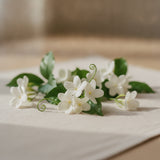
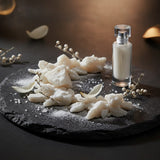


Perfect For



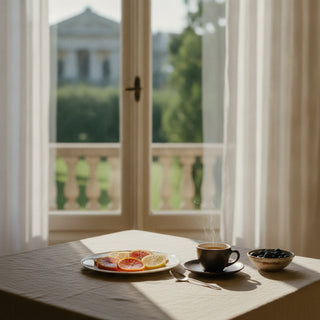

Season to Wear
Frequently asked questions
What does d'Annam White Rice Eau de Parfum smell like?
d'Annam White Rice Eau de Parfum opens with Rice, Pandanus, develops a heart of Orris, Jasmine, and settles into a base of White Musk, Tonka Bean, Cedarwood.
Who is the perfumer behind d'Annam White Rice Eau de Parfum?
d'Annam White Rice Eau de Parfum was composed by Anh Ngo for d'Annam.
When should I wear d'Annam White Rice Eau de Parfum?
d'Annam White Rice Eau de Parfum performs best in spring. It suits occasions like Spring, Date Night, Everyday, Daytime, Romantic Evening.
Is d'Annam White Rice Eau de Parfum for men or women?
d'annam positions d'annam white rice eau de parfum as a unisex fragrance.
Is d'Annam White Rice Eau de Parfum at Redolia authentic?
Yes. Redolia sells only 100% authentic fragrances sourced directly from the houses and their authorized distributors, shipped from our perfumery in Somerville, New Jersey.


YOUR PERSONAL SHOPPER
Need help finding your next signature scent?
Tell our fragrance assistant two or three perfumes you already love and it will match your next bottle from our shelves - or teach you how to layer the ones you own.