The best way to test perfume in a store is to smell it on a paper blotter first, then put only your one or two favourites on your skin and wear them for a few hours before you decide. Skip the coffee beans; the research says they do not reset your nose any better than fresh air.
Quick answer: how to test perfume properly
Use blotters to shortlist, skin to decide, and time to confirm. Spray a blotter, smell the opening, narrow your choices to two, then wear one on each wrist and walk away. Judge the perfume after it has dried down for an hour or more, not in the first ten seconds.
Most buying mistakes happen because people fall for the first spray. That bright opening is the part of a perfume that disappears fastest.
Why the first spray can fool you
Every perfume unfolds in stages. The top notes (the lightest, most volatile ingredients, like citrus and many herbs) are what you smell first and they fade quickest. The heart notes (the main body of the scent, often florals or spices) take over next, and the base notes (heavier materials like woods, musks, vanilla and resins) last the longest. The slow transition from opening to base is called the dry-down.
So a perfume that smells like a fresh lemon in the store can be a creamy wood on your skin by lunchtime. If you want a refresher on how that progression works, our guide to top, heart and base notes walks through it.
How to use a perfume blotter (and what it is good for)
A blotter, also called a scent strip or mouillette, is a thin strip of absorbent paper made for smelling perfume. It lets you try many scents without covering your arms in them.
- Label it first. Write the name on the end of the strip before you spray, because after the third blotter you will not remember which is which.
- Spray once, then wait a few seconds. Smelling it the instant it is sprayed mostly gives you a blast of alcohol.
- Hold it close, not touching your nose. Take a few gentle sniffs rather than one deep one.
- Keep the blotters. Smell them again later in your visit, and again at home. The blotter shows you how the scent develops, too.
Blotters are excellent for shortlisting. They are not a final verdict, because paper does not behave like skin.
How to test perfume on skin
Once you have a shortlist, skin is where the real decision happens. Here is the routine we use in the boutique:
- Pick two, not five. One fragrance per wrist or inner forearm, so there is never any doubt which is which.
- Spray once from a short distance and let it air-dry. Do not rub your wrists together; it smears the fresh layer and makes the opening harder to judge.
- Smell it three times: right away, after about 15 to 30 minutes, and again a few hours later. The middle and late impressions matter most.
- Leave the store. Go for a walk or carry on with your day. Perfume behaves differently once you are away from a room full of other scents.
- Notice how it feels at the end of the day. Do you still enjoy it? Did anyone mention it? Did it fade faster than you hoped?
Expect some surprises. The same perfume can smell noticeably different on two people, which we explain in why perfume smells different on me than on someone else.
Do coffee beans really reset your nose?
Many perfume counters set out a little jar of coffee beans as a "nasal palate cleanser." The idea is that sniffing them clears your nose between perfumes. It is a lovely ritual, but the evidence does not support it.
Researchers at Beloit College tested exactly this. Participants smelled three fragrances repeatedly, then sniffed coffee beans, lemon slices or plain air before trying to pick out which of four fragrances they had not smelled yet. According to the study, published in Perceptual and Motor Skills in 2011, coffee beans did not produce better results than lemon or plain air.
What does happen is real: repeated exposure to a smell makes it seem weaker. A 2017 review in Physiology & Behavior describes this habituation to odors as relatively fast. That is the reason your nose gets tired at a busy counter, and the fix is simple: fewer perfumes, short breaks and fresh air. If you have ever stopped smelling your own fragrance after an hour, our article on nose blindness covers the same effect.
How many perfumes can you test at once?
There is no official limit, but most noses lose sharpness after several scents in a row. A good rhythm is to explore freely on blotters, shortlist two, and wear only those. If you want to try more, come back another day with a fresh nose.
Testing is also easier when you are not wearing a strong perfume, scented lotion or heavily fragranced hand cream yourself. Anything already on your skin will mix with what you are trying.
Test at home with a discovery set
The most honest test of any perfume is a few days of real life: a cold morning, a warm afternoon, an evening out. That is where a discovery set (a box of small sample vials from one house) earns its keep. You can wear a different scent each day and only commit to a full bottle once you are sure.
- Room 1015 Discovery Set holds ten 2.5 ml vials covering the whole Room 1015 range, from the surfy citrus of Wavechild to the dark cherry of Cherry Punk.
- Iggywoo The Discovery Set has six 2 ml sprays, including the salty citrus of Bohemian Water and the musky vanilla of Lost In Vanillatopia, so you get very different styles to compare.
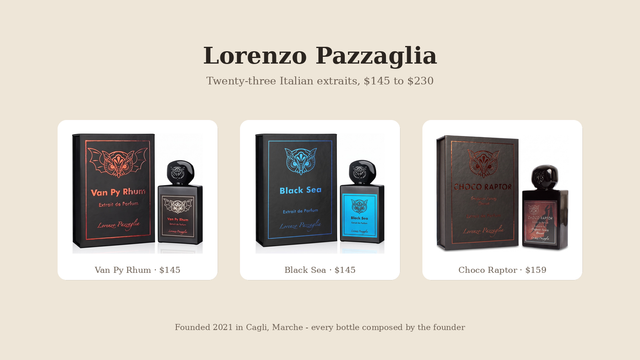
- Lorenzo Pazzaglia Discovery Set gathers ten 2 ml extraits from the Italian house, a sensible way into a large and bold line before choosing a full bottle.
- Narcotica Discovery Set collects the house's rich, gourmand-leaning extraits in 2 ml travel sprays.
- BORNTOSTANDOUT Dark & Drunk Discovery Set has eight 2 ml sprays of the house's boozy, smoky side and even comes with its own blotter cards.
Discovery sets are also a good way to learn your own taste. If every citrus opening vanishes too fast for you, that tells you something useful before you browse our citrus fragrances.
Testing perfume with sensitive skin
Most people wear perfume without trouble, but fragrance ingredients can cause skin reactions in some people. If you know your skin is reactive, start with a blotter or a spritz on a scarf rather than your wrist.
For a new product, the American Academy of Dermatology suggests testing it on a small spot, such as the inner arm, twice a day for seven to ten days and stopping if you see redness, itching or swelling. If a reaction does not settle, see a dermatologist.
Try it at our boutique
Our team will happily walk you through this: smell them side by side at our Somerville boutique, 92 West Main Street, and take your blotters home with you.
Related: coming from Pennsylvania? See Niche Perfume Store Near Philadelphia: Try at Home or Visit Somerville, NJ.
Related: testing at home instead? See the best niche perfume discovery sets and how to work through the vials.
Frequently asked questions
What is the best way to test perfume?
Spray it on a paper blotter first to see if you like the opening, then put your favourite one or two on your skin. Leave the store, wear it for a few hours and judge the dry-down, not the first spray. If you still love it at the end of the day, it is worth buying.
How do you test perfume on skin?
Spray once on the inside of your wrist or forearm from a short distance and let it dry on its own, without rubbing. Smell it right away, again after 15 to 30 minutes, and again a few hours later. Use one fragrance per arm so you always know which is which.
Do coffee beans really reset your nose?
There is no good evidence that they do. In a 2011 study published in Perceptual and Motor Skills, people who sniffed coffee beans between fragrances did no better at picking out a new scent than people who sniffed lemon or plain air. Stepping outside for fresh air, or simply taking a break, is just as useful.
How many perfumes can you test at once?
There is no official number, but most people find their nose gets tired after a handful of scents. A practical plan is to smell several on blotters, narrow them down to two, and put only those two on skin. Repeated sniffing makes smells seem weaker, so fewer careful tests beat many rushed ones.
How long should you wait before deciding on a perfume?
At least a couple of hours, and ideally a full day of wear. The opening notes that grab you in the store are the first to fade, and the heart and base notes that follow are what you will live with. If you can, wear a sample on more than one day before committing to a full bottle.
Why does perfume smell different on the blotter and on my skin?
Paper is neutral, while skin is warm and has its own oils and chemistry, so the same perfume can open faster, turn sweeter or fade sooner on you. A blotter is good for judging the idea of a scent. Your skin tells you how it will actually wear.
Should I rub my wrists together after spraying perfume?
No. Rubbing does not help the perfume and makes the opening harder to judge, because you are smearing and warming the fresh layer. Spray, then let it dry naturally.
Is it safe to test perfume on sensitive skin?
Fragrance can cause skin reactions in some people. If your skin is sensitive, test on a blotter or on clothing first, and follow the American Academy of Dermatology's patch-test approach for new products: a small spot on the inner arm, repeated over several days. Stop using anything that causes redness, itching or swelling, and see a dermatologist if a reaction persists.